“Do I need a CDL to pull this?” is the question we hear most. The honest answer is: it depends on the truck. Below is how the rules work, how Couger’s 16K and 20K trailers fit into them, and where to get a firm answer for your own rig. This is general information, not legal advice.
What GVWR actually means
Gross Vehicle Weight Rating (GVWR) is the maximum the manufacturer rates a single vehicle to weigh loaded — the trailer itself plus the dumpster plus whatever’s in it. A “16K” trailer is rated for 16,000 lb; a “20K” trailer for 20,000 lb. It’s a rating, not what the trailer weighs on a given day — and for licensing, the rating is what counts.
Your truck has its own GVWR, printed on the certification label in the driver’s door jamb. Some labels also show aGross Combination Weight Rating (GCWR) — the most the truck and everything it tows may weigh together.
16K vs 20K at Couger
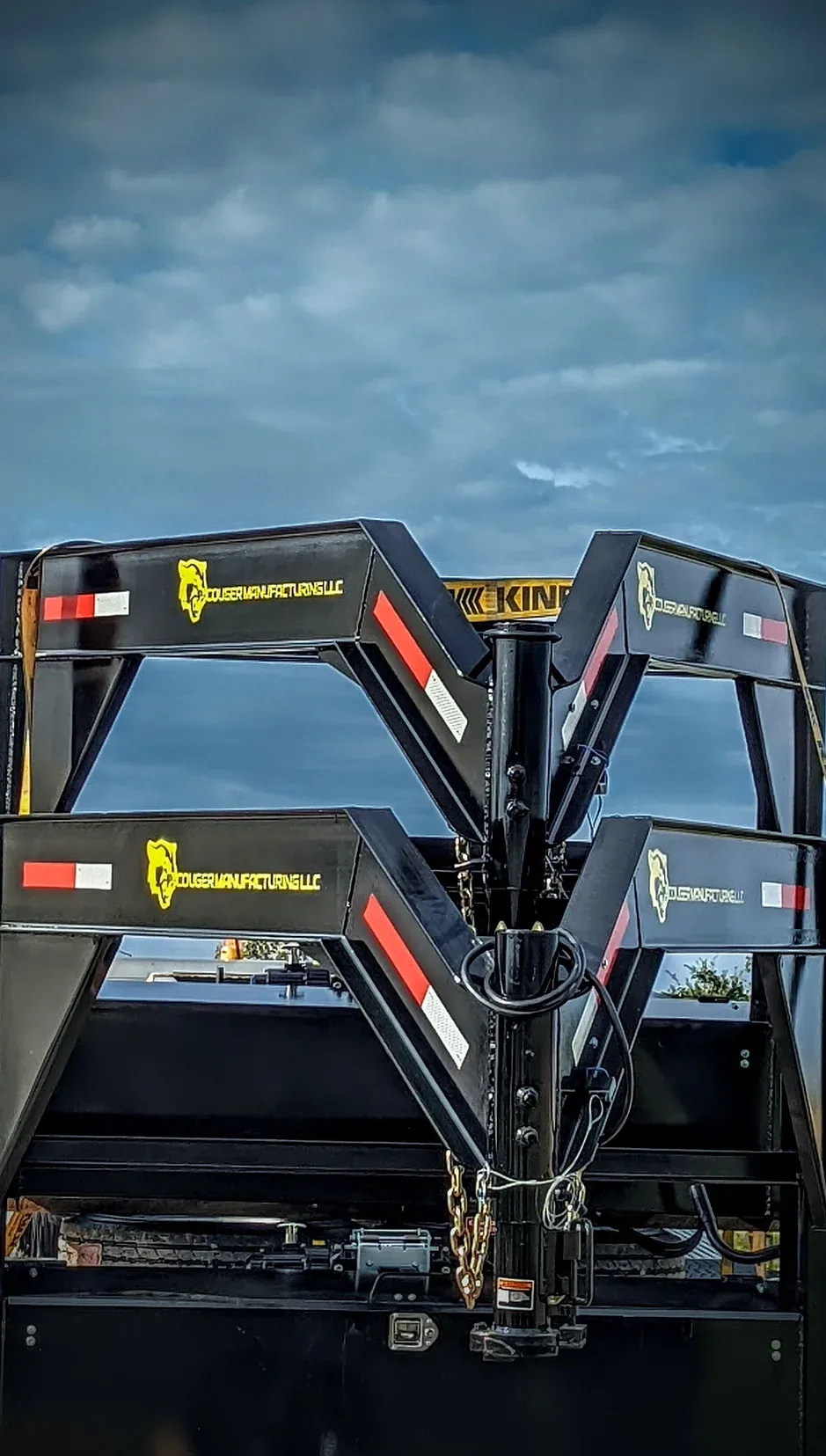
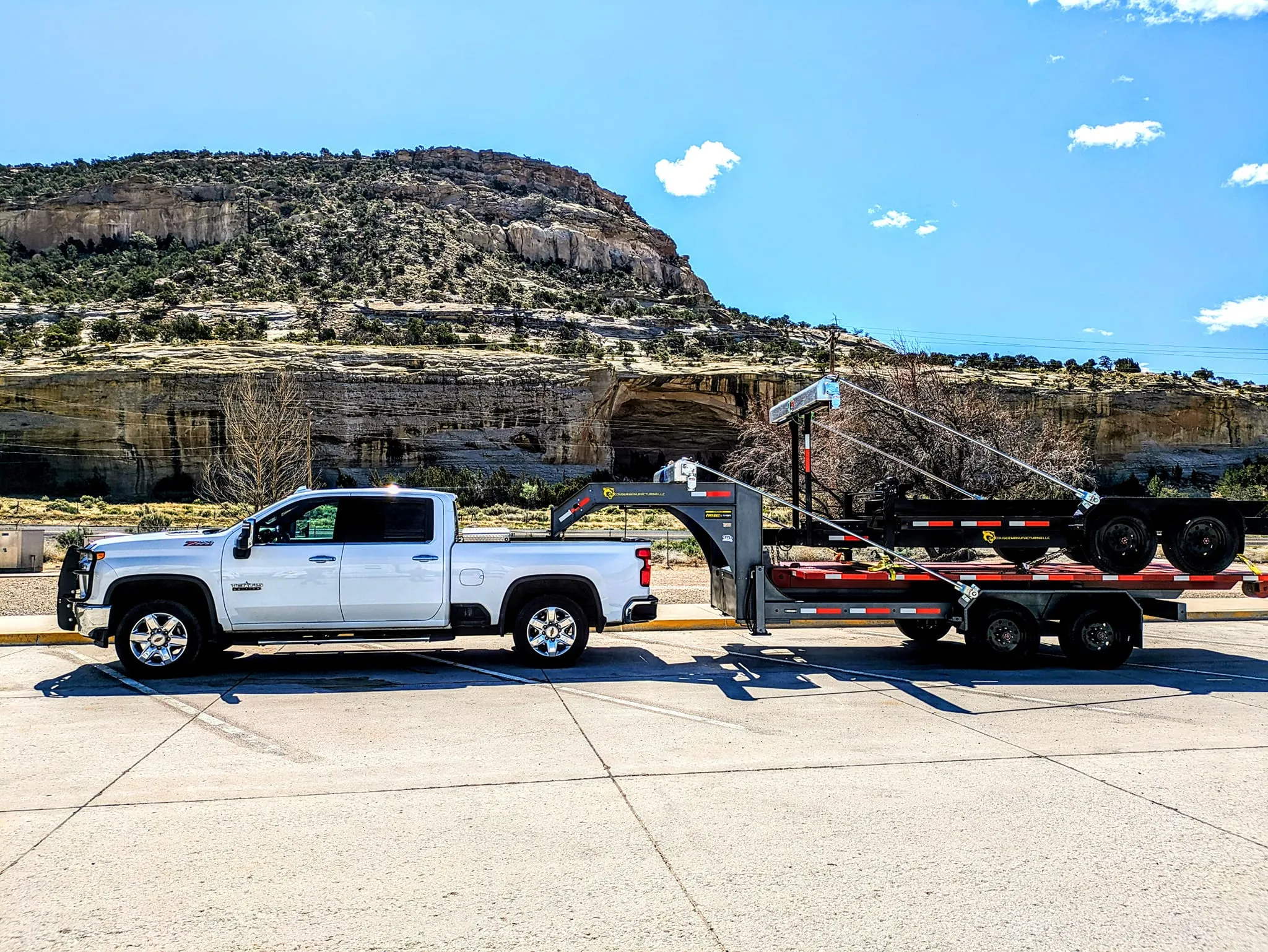
- 16K: the BP14FT-16K-RT bumper pull ($16,125.00) and theGS14FT-16K-RT gooseneck ($16,550.00). 14ft, built for 14ft standard rail dumpsters, hydraulic scissor lift, 20k winch.
- 20K: the GS 16ft 20k gooseneck ($19,850.00). 16ft, 10k oil-bath spring axles, 24k scissor lift, 22k winch and 17.5-inch 18-ply tires.
More GVWR means more margin for heavy loads like concrete, dirt and roofing. Your real payload is the GVWR minus the empty trailer and the empty dumpster — call us for current weights on the model you’re looking at. All three trailers are side by side on thecomparison page.
The Class A CDL rule
Federal rules (49 CFR 383.91) and Texas law (Transportation Code §522.041) use the same test. A Class A CDL is required to drive a combination in commerce when both are true:
- the combination’s GCWR is 26,001 lb or more, and
- the towed trailer’s GVWR is more than 10,000 lb.
Every Couger roll-off is rated 16,000 lb or more, so the second condition is always met. That leaves the first one — and that’s where your truck comes in.
How the combination rating is figured
The current federal definition (49 CFR 383.5) says GCWR is the greater of (1) the GCWR the truck manufacturer prints on the certification label, if it shows one, or (2) the sum of the GVWRs — or actual weights — of the truck and trailer. Texas DPS’s own CDL flowchart asks whether the truck’s and trailer’s GVWRs together reach 26,001 lb. The Texas statute’s definition of GCWR is worded a little differently from the federal one. That gap is exactly why you should get a ruling for your specific truck.
Here’s the simple “add the GVWRs” math with made-up truck numbers:
| Trailer GVWR | Example truck GVWR | Sum | By the sum alone |
|---|---|---|---|
| 16,000 lb | 9,900 lb | 25,900 lb | Under 26,001 lb — but check the truck’s label GCWR |
| 16,000 lb | 11,500 lb | 27,500 lb | At or over 26,001 lb — Class A territory |
| 20,000 lb | 9,900 lb | 29,900 lb | At or over 26,001 lb — Class A territory |
Two things jump out. With a 20K trailer, any truck rated more than 6,000 lb — which is any truck you’d hook to it — puts the combination over the line. With a 16K trailer, the sum only stays under 26,001 lb if the truck’s GVWR is 10,000 lb or less, and even then a GCWR printed on the truck’s label can be what counts under the federal definition. Don’t assume either way: read the label and verify.
Verify for your situation. Before you buy a truck, a trailer, or hire a driver, confirm your exact combination with the Texas DPS Commercial Vehicle Enforcement Service (512-424-2000, listed by TxDMV) or a local DPS office. Exemptions exist — for example for some farm use and for recreational vehicles driven for personal use — but they generally don’t fit a dumpster rental business.
It’s not just the licence
Once a business is running heavier combinations, other rules can apply too:
- USDOT number. FMCSA requires one for businesses hauling cargo in interstate commerce with a vehicle or combination rated or weighing 10,001 lb or more. Federal safety rules — driver qualification and medical exams, hours of service, inspection and maintenance — come with it.
- TxDMV number. Texas requires intrastate motor carrier registration for a vehicle or combination with a gross weight, registered weight or gross weight rating over 26,000 lb used for cargo in a commercial enterprise. You need a USDOT number first, and TxDMV lists a minimum $500,000 liability insurance filing for these carriers.
These costs belong in your business plan — see what it costs to start a dumpster rental business.
So which should you buy?
If your work is mostly residential cleanouts and lighter debris, a 16K trailer is usually enough and keeps your truck options wider. If you’ll haul heavy material or want a longer deck, the 20K gooseneck gives you headroom — and you should plan on drivers with a Class A CDL. Not sure your truck is up to it? Read what truck you need, then call or text 254-214-7050. When you’re ready, price a trailer with dumpsters on the starter package page, look at financing, or get a quote.
Sources
- 49 CFR 383.91 — Commercial motor vehicle groups (eCFR)
- 49 CFR 383.5 — Definitions, incl. GCWR (eCFR)
- Texas DPS — Classes of Driver Licenses
- Texas DPS — CDL flowchart (TRC Sec. 522.041)
- Texas Transportation Code Chapter 522 — Commercial Driver’s Licenses
- FMCSA — Do I Need a USDOT Number?
- TxDMV — TxDMV Number (intrastate motor carrier registration)