A roll-off trailer is only as good as the truck in front of it. A loaded dumpster full of shingles or broken concrete is a serious load, and the truck has to stop it, steer it and carry its share of the weight — every day, in Texas heat. Here’s how to check whether your truck is up to it before you spend money on a trailer.
Start with the trailer’s loaded weight
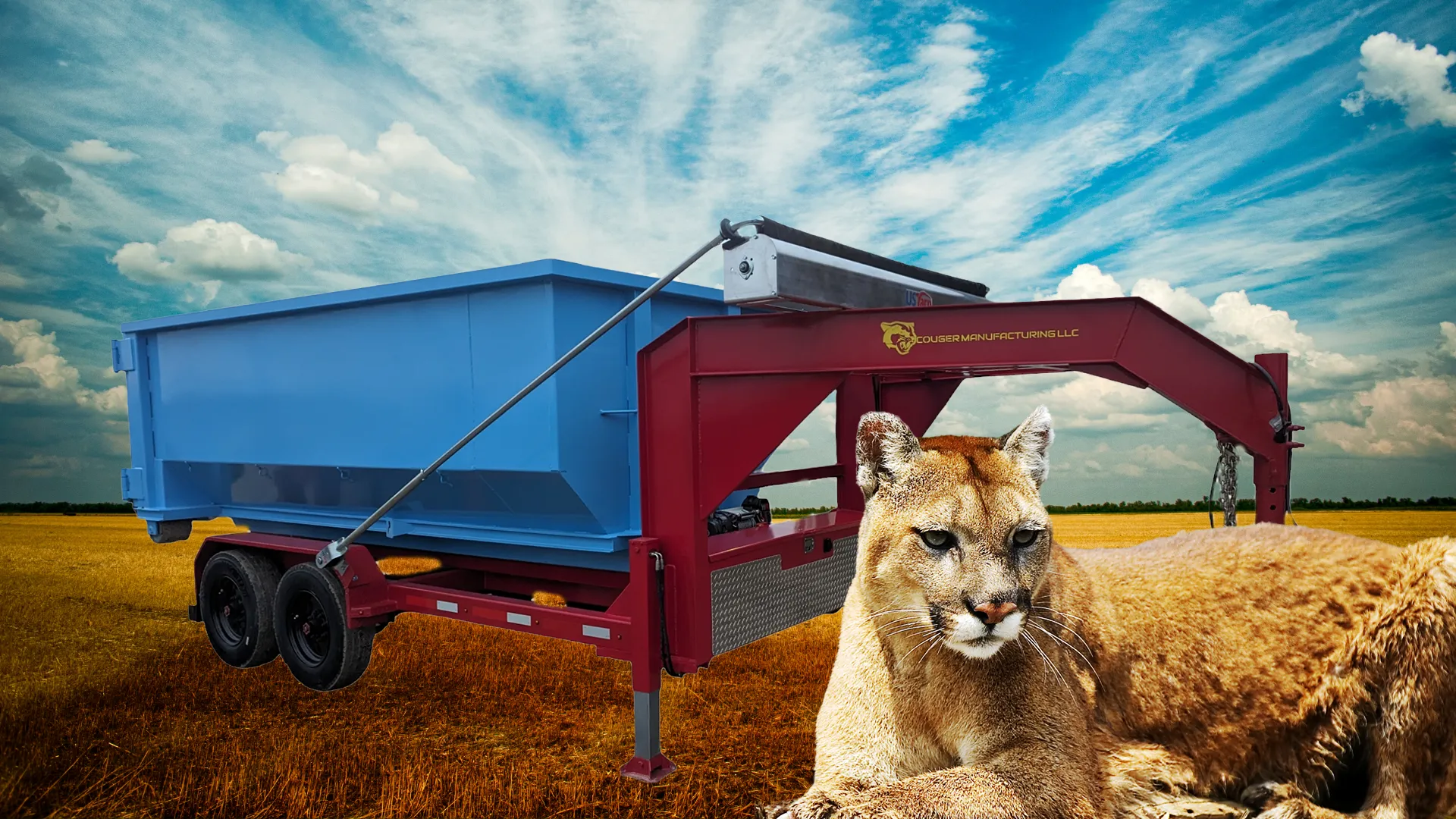
Size the truck for the trailer at its rating, not empty. Couger’s BP14FT-16K-RT andGS14FT-16K-RT are rated 16,000 lb GVWR; the GS 16ft 20k is rated 20,000 lb. You won’t run every can at the limit, but you’ll have the day a customer fills one with dirt — and your truck has to handle it legally and safely.
The five numbers on your truck
Federal rules require the truck’s certification label (usually in the driver’s door jamb) to show its GVWR and axle ratings. The rest is in the owner’s manual or the manufacturer’s towing guide for your model year.
- GVWR — the most the truck itself may weigh, including passengers, fuel, tools and the hitch weight of the trailer.
- Rear GAWR — the rear axle’s rating. Gooseneck pin weight and bumper-pull tongue weight both land mostly here.
- GCWR — the most the truck and trailer may weigh together. Some labels print it; otherwise it’s in the towing guide.
- Towing rating — the manufacturer’s maximum trailer weight for your exact cab, bed, engine, axle ratio and drivetrain. Ratings often differ between conventional (bumper) and fifth-wheel/gooseneck towing.
- Payload — what’s left of GVWR after the truck’s own weight. Hitch weight eats into it.
The lowest number wins. A truck advertised with a huge towing figure can still be over its payload or rear axle rating once a loaded trailer’s hitch weight is on it. Weigh the truck at a scale with the trailer loaded if you’re close.
Gooseneck: what the truck needs
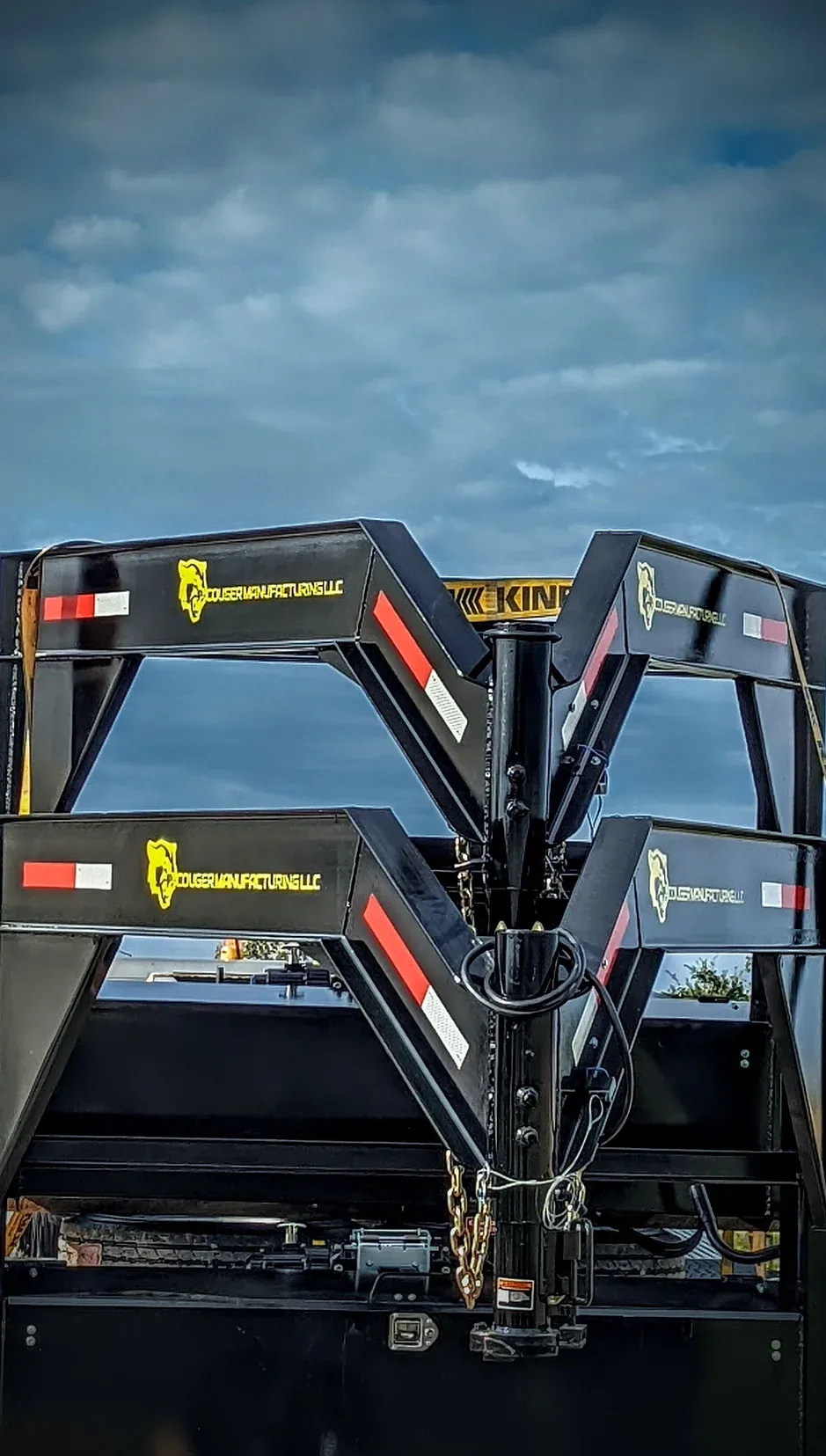
The GS14FT-16K-RT and GS 16ft 20k need a gooseneck hitch installed in the bed, rated for the trailer’s full weight and its pin weight. The pin sits over or just ahead of the rear axle, which is the main reason goosenecks feel planted — but that pin weight still counts against payload and the rear GAWR. Long-bed vs short-bed clearance is worth checking on tight turns.
Bumper pull: what the truck needs
The BP14FT-16K-RT hooks to the receiver. Check the rating label on the receiver, the ball mount and the ball itself — all three have a maximum trailer weight and a maximum tongue weight, and the lowest one is your limit. A receiver that came with a light-duty package is not the same as a heavy-duty one, even if they look alike.
Not sure which hitch style suits your truck? Read gooseneck vs bumper pull.
Brakes, wiring and the hydraulics
A heavy trailer needs working trailer brakes and a brake controller in the truck that’s matched to them, plus a trailer plug that powers lights and brakes. Ask us what brake and wiring setup comes on the model you’re looking at so you can get the truck side ready before pickup. Options like the wireless remote (to run tilt, winch and tarp from one remote) are listed on each product page.
Licence: the truck decides more than you think
Whether a driver needs a Class A CDL for commercial work depends on the combination rating — and that starts with the truck’s GVWR and any GCWR on its label. Two people can buy the same Couger trailer and get different answers because they drive different trucks. Read16K vs 20K GVWR and when you need a CDL and verify your setup with Texas DPS.
Quick pre-purchase checklist
- Photo of your truck’s door-jamb label (GVWR, GAWR, and GCWR if shown).
- Towing guide page for your exact truck configuration.
- Rating labels on your receiver/ball mount/ball or gooseneck hitch.
- Brake controller and trailer plug in working order.
- A plan for licensing and registration — see the startup cost guide.
Text that label photo to 254-214-7050 and we’ll help you match it to the right trailer — from $16,125.00 for theBP14FT-16K-RT. Compare models on the comparison page, see starter packages, checkfinancing, or request a quote.